Episode Transcript
[00:00:05] Speaker A: Welcome to the KMUD News.
I'm your news Director, April Lewis, and I'm glad to be with you for this broadcast.
On this episode, we'll have in depth coverage of Representative Jared Huffman's visit to Soham Health, our interview with Humboldt Registrar Voters Juan Cervantes on those missing ballots from last November's election, and a report on state budgeting for rural areas presented to the Humboldt County Board of Supervisors.
But first, a rundown of today's top stories and headlines. This is KMUD News, Starting off with some news from Cal Fire Windy conditions are expected across multiple counties in Northwestern California.
While temperatures have been moderate, wind is the biggest influencer of wildfire behavior. The Cal Fire Humboldt Del Norton Unit would like to remind the public that outdoor debris burning could lead to escape wildfire when not conducted properly.
May 1 marked the beginning of the Cal Fire burn permit requirement on state responsibility areas and Humboldt, Del Norte and Trinity counties.
The North Coast Unified Air Quality Management District requires a permit any time of year for outdoor debris burning.
This time of year typically means an increase in outdoor debris burning to provide for your safety and the safety of neighboring properties. It is important to always follow all permit terms and conditions Every year. Cal Fire responds to Debris burn Escapes when residents underestimate weather conditions, the current windy conditions can lead to an escape, especially when burn permit terms are not followed.
It is important to always remain in attendance, have clearance to bear soil around the pile and to not burn when it is windy.
Permits also require burn piles to be fully extinguished at the end of the allowable burn time on the permit.
An unextinguished burn fire can hold heat and embers for multiple days, even weeks, depending on the conditions.
Such unextinguished, unattended piles are more susceptible to escape during windy conditions.
Anyone who has burned recently should check their piles to ensure full extinguishment and to ensure there will not be an escape.
In regional news, and news specifically for the Eel river watershed, a new report from the Santa Rosa Press Democrat states that a second Southern California municipality is interested in purchasing the Potter Valley project.
The San Gorgonio Pass Water Agency has joined Riverside County's Elsinore Valley Municipal Water District in expressing interest and have since made a series of site visits to the existing facilities historically used for power generation and water diversions.
Progress has been made for years on removing the project's dams and lessening or even eliminating water diversions.
This new interest by water districts in Southern California puts a damper on those hopes, although next steps for a potential purchase are not exactly clear.
This is a developing and long term story with serious impacts for our region's resources and watersheds. We'll keep you updated with new developments.
The Humboldt Superior Court is still looking for volunteers for its 2026-2027 civil grand jury, the court and panel's 19 citizens to act as an independent body of the judicial system each fiscal year with a term from July 1 to to June 30.
The court also encourages citizens to apply and be considered to serve as alternates if and when vacancies occur. During the term of service, the Court accepts applications from citizens representing a broad cross section of the Humboldt county community.
The Civil Grand Jury is currently meeting in person one day a week and via Zoom one day a week. The primary work of the Civil Grand Jury is to investigate and review citizen complaints to concerning the operations of city and county government as well as other tax supported nonprofit agencies and districts.
Based on these reviews, the Civil Grand Jury publishes its findings and reports recommending constructive actions to improve the quality and effectiveness of our local government.
The Civil Grand Jury does not consider criminal indictments.
For more information on the application process, please contact the court administration at 707269 1204.
On May 18th at approximately 8:30am detectives with the Eureka Police Department, along with officers from the Community Safety Engagement Team served a search warrant at an apartment on the 200 block of P Street.
The search warrant was related to an ongoing sexual assault investigation and being conducted by EPD.
During the service of the search warrant, officers contacted 48 year old Edward Nigu of Eureka.
Evidence related to criminal activity was located and collected from the residents and Nigu was taken into custody on the following charges.
Warning the following is Sodomy of a person under age 16 sodomy by means of forced violence duress Oral copulation with a person under 16 lewd acts with a child, Distribution of child pornography contacting a minor for the purpose to commute lewd acts, meeting with a minor for the purpose of commuting lewd acts, sexual penetration of a minor and false imprisonment along with providing an intoxicating agent for the purpose of committing a felony. This remains an ongoing and active investigation.
Anyone with information related to this incident is encouraged to contact Detective Bailey at 707-441-4300.
At Cal Poly A new research collaboration between Cal Poly Humboldt and Global athletic company New Balance is giving undergraduate students a rare opportunity to contribute to cutting edge science while helping answer a question runners around the world are asking how do super shoes affect the way we run.
Known as Advanced Footwear Technology Shoes, these high performance running shoes feature resilient foam, thick midsoles and embedded carbon fiber plates designed to improve performance for runners.
Studies show they can reduce the energy cost of running by as much as 2.7 to 4.2%, but not all runners experience the same benefits.
The study focuses on understanding how runners differ in their responses to these shoes and what may underlie those differences. The team used advanced tools like 3D motion capture, electromyography and metabolic analysis to study movement and muscle activity to measure details such as how people walk and how their muscles activate. The project has already enrolled about 30 participants with the goal of reaching 40.
While results are still being analyzed, the implications could extend beyond elite racing, influencing how everyday runners choose their shoes.
And now to our main stories. This is KMUD News.
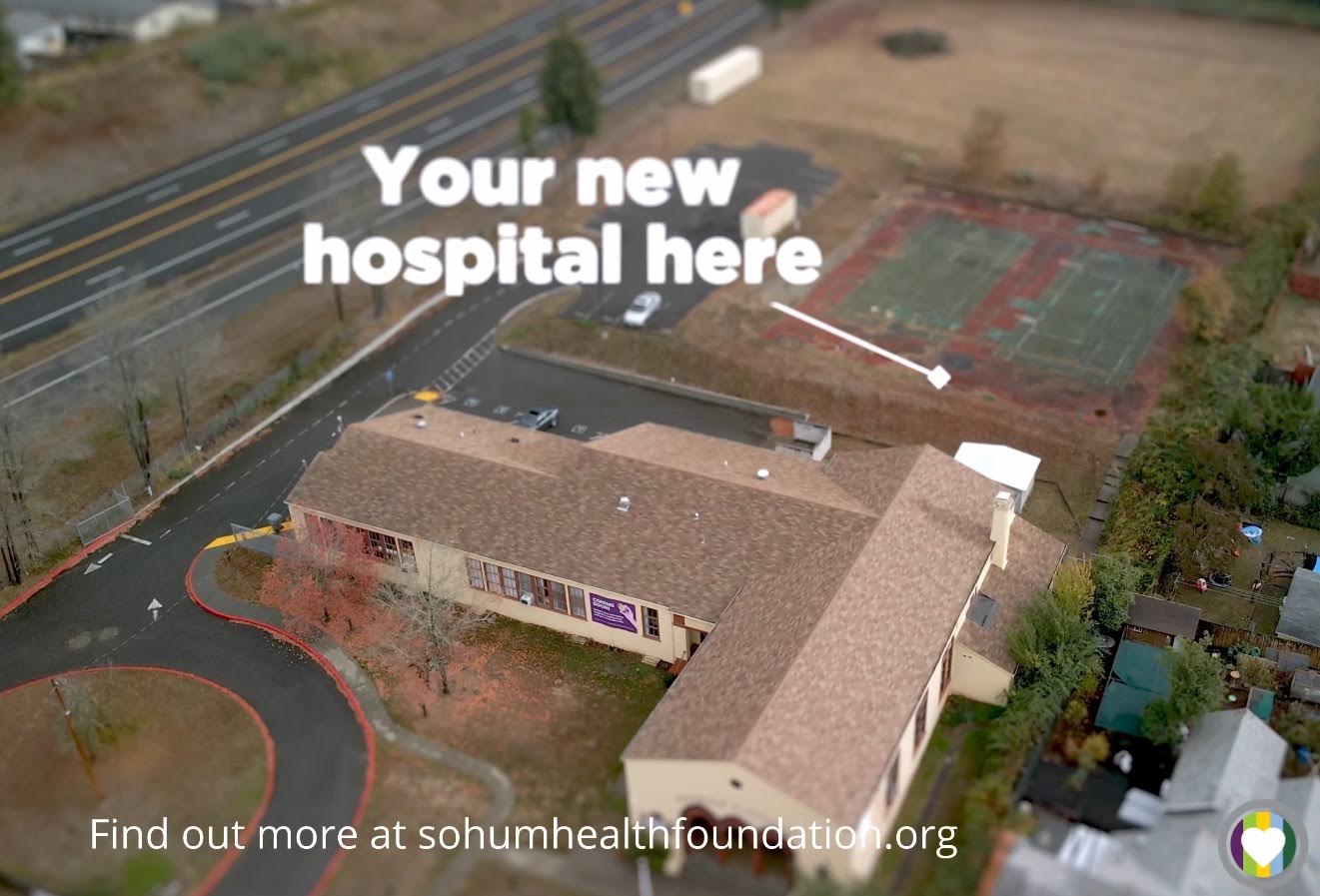
We'll begin with Congressional Representative Jared Huffman and his visit to Soham Health to discuss their plans for a new hospital. KMUD News reports.
Rural health care has been a prominent political topic since the passage of HR1 last year, also known as President Trump's Big Beautiful Bill.
The bill itself cut $30 million of federal funding from in state medi cal insurance programs on a yearly basis.
Many rural hospitals are facing funding shortages and in the case of some local institutions like Arcata's Mad River Community Hospital, staffing cuts and the potential for closure. Gerald Phelps Community Hospital in Garberville and the Southern Humboldt Community Health Care District, also known as Soham Health, which operates the hospital and associated services like their clinic and pharmacy, is taking a different approach than most similar sized hospitals. At a time of general funding strife across the medical industry.
Soham Health is looking to both break ground on a new hospital in Garberville while renovating a number of former businesses to improve Garberville's downtown and the number of services offered to patients. The hospital project itself is currently estimated to cost $86 million to build. On Sunday, May 17, US congressional representative Jared Huffman visited with staff and representatives from Soham Health to discuss helping their efforts for a new medical facility and expanded services for the region.
They also discuss the unique challenges, from funding or otherwise, of delivering comprehensive health care to southern Humboldt. We'll start with Sohum Health CEO Matt Rees speaking with Representative Huffman on their patient population and how Sohum has a high percentage of Medicaid and Medicare reimbursements compared to most hospitals. At about 80% of the hospital's total revenue.
[00:10:05] Speaker B: Medicare's about 35% of our revenue, Medicaid's about 40 45%. Wow, 45%. Yeah, it was 44 last year. Do you know, are there a lot of hospitals that have that high a Medicaid ratio?
You gotta be in the high tier. If they have a big SNF in that big nursing home, yeah, okay, they could be. But other than that, I think we're one of the top. Yeah, good for me to know. Yeah.
80% of our revenue comes from government sources, Medicare and Medicaid.
[00:10:40] Speaker A: Jared Huffman then asked what a new hospital would mean to southern Humboldt with a response from SOHAM Community Health Board member and Executive Director of the Garberville Chamber of Commerce, Yvonne Hendricks.
[00:10:54] Speaker C: Yeah, I think it's going to be a life saving entity. I think it's going to be job creation. I don't see anything else coming down the pike that's going to create that. But keeping our critical hospital here and getting the funding and building the new hospital, expanding it, it's going to be a game changer.
[00:11:15] Speaker B: One of the bigger things in Southern Humboldt in a long time.
[00:11:19] Speaker C: Absolutely, one of the bigger things. And that, I mean, we're going to draw a lot of people from a lot of areas, going to bring people in here, just taking advantage of the services that we have, which is then going to give an economic boost to our restaurants, to our hotels and also to our shops. And so I don't see anything else that's going to be able to drive that economic impact forward.
[00:11:41] Speaker B: It was good to hear that from you because that's sort of my sense.
[00:11:45] Speaker A: Huffman later echoed Hendricks and her remarks at the currently under construction optometry clinic in downtown Garberville, directly next to the Eel River Cafe. The optometry clinic is one of the four total projects Soham Health is currently working on in downtown Garberville. Yvonne Hendricks also responded with some statistics on the current hospital as an employer.
[00:12:08] Speaker B: This is not just a one and done project. This will have enduring ripple effects for the economy and the community. People will feel better about living here, about traveling here.
[00:12:22] Speaker C: Also the new hospital, I mean right now I believe the hospital, we are the largest employer in Southern Humboldt.
[00:12:29] Speaker B: Is that right? Wow.
[00:12:29] Speaker C: Yes. And so when the new hospital gets built again, it's going to create jobs and be a huge economic driver for our area.
[00:12:37] Speaker B: That's great.
[00:12:38] Speaker A: Representative Jared Huffman ended his visit by stating support for the new hospital project and also detailing one of the ways he is attempting to help bring in more funding to the hospital effort.
[00:12:51] Speaker B: Well, nice to see this happening in downtown.
Nice to see the new hospital emerging a few Blocks away. I mean, this is really exciting.
Something's happening in Garberville.
Yeah. It's been going on for a long building slowly.
[00:13:07] Speaker A: We're trying our hardest.
[00:13:10] Speaker B: That's right.
Gosh. And for the chamber and others who have been just struggling, I mean, I've had a lot of meetings in Garberville over the years, and it's been tough to find forward progress. It really has been.
So this is. This is great. I'm really happy to be trying to get some money to help and will support you in any way I can.
[00:13:35] Speaker A: Could you summarize a little bit of what you're doing in terms of trying to get us a little more funding for the hospital?
[00:13:39] Speaker B: Yeah. I have this pot of money for community projects every year.
It's not a huge amount. It's like between 14 and 20 million tops that I've got to spread around the six counties I represent right now.
And I try to, you know, get applications for. From folks for projects that don't really fit other funding programs so that, you know, important things that would be impactful but may not get funded because they're just falling between the cracks. And so this is. This is one we're putting in for.
And we're going to hope that the appropriations process includes that community project funding. So far, it does.
So there's reason to be optimistic, I think.
[00:14:26] Speaker A: On top of Huffman's remarks, the health District is also keeping tabs on California Assembly Bill 2355, which would require California officials when developing statewide health funding strategies to include the differing needs of rural hospitals, including community and critical access hospitals. After Representative Huffman departed, Sohum Health CEO Matt Rees spoke on the success of Soham Health's pharmacy that opened during the Pand, after which Board President Kevin Church elaborated on an expansion of pharmacy services in a new location the health district is actively renovating.
[00:15:03] Speaker B: So, like everybody knows, Keith's Pharmacy closed years ago during the pandemic. And we opened up the pharmacy so we could meet the needs of the community.
And that has helped us out a lot as well.
So it's producing revenue. We fill 3, 300 prescriptions a day on average close. And one of the reasons
[00:15:26] Speaker D: there are
[00:15:26] Speaker B: justifications for this purchase and renovation is that the pharmacy has been successful beyond our original expectations.
And frankly, we're kind of space limited to meet the needs in the community, so we need a bigger space for them.
[00:15:44] Speaker A: Despite major challenges, including lower medi cal reimbursements, the Southern Humboldt Community Health District is financially solvent in bringing in more revenue than their general operating expenses. That in itself is a major achievement for the health district in uncertain times, both for the economy and the healthcare industry to build a new hospital. The district is also actively pursuing grants, fundraising, local funding measures and tax credits. Around $12 million has already been invested in architect fees to get the project started.
If you would like to learn more, head to sohumhealth.org, click on about at the top of the page as new hospital info is listed there, including mock ups of the proposal.
Reporting for KMUD News, I'm April Lewis.
In a presentation to a local economic networking group, a former state legislative aide gave his take on state budget issues and how they affect rural areas. Daniel Mintz reports.
[00:16:53] Speaker E: In an online presentation, a former state lobbyist who's now working as a consultant gave a snapshot of how state level moves are affecting rural areas.
Dan Carrig, who worked for former Assemblymember Dan houser in the 1990s, described rural needs and funding for them during a May 13 presentation to the Community Economic Resilience Consortium.
He gave the presentation a day before state governor Gavin Newsom released the revise of his draft budget.
It includes spending cuts and Newsom says it's balanced and without a deficit. But Carrick said there's been deltas between the interpretations of governors and the Legislative Analyst's Office.
[00:17:41] Speaker F: There's been a debate going on for probably the last four or five years between the governor and the Legislative Analyst as to what the condition of the state budget is.
You've had the governor come out with a series of different budgets between the governor and the Department of Finance. You're thinking things are pretty much okay. If there's a deficit, it might be just kind of a slight one. And then you have the Legislative Analyst is the nonpartisan office that advises the governor saying, wait a second, we think there's a 20 to $30 billion structural deficit. In other words, the state has been spending more money than it's taking in and we're not even really in a recession. So there's They've been ringing alarm bells.
[00:18:28] Speaker E: Carrick highlighted Proposition 4, known as the climate bond, which includes several pots of funding relevant to rural areas.
He said those include wildfire prevention and response, coastal resilience, biodiversity, agriculture and outdoor activity.
Cannabis related state budget funding is likely to continue, and California's Opportunity Zone program, which draws investment through federal tax breaks, is seeing changes that will benefit rural areas.
[00:19:02] Speaker F: A big difference between the prior round of the program and this one is there's a much sweeter incentive for investors to invest in rural areas than before.
As you can see, if you just invest in a normal area that qualifies for an opportunity zone, the investor gets a 10% step up in basis.
If you invest in a rural area, it's 30%.
So maybe some of these firms that specialized in opportunity zones the last time around weren't really knocking on your door because maybe it's harder to do stuff in rural areas and they want to go where maybe the easier stuff is. They've got much more of an incentive to try to do stuff in rural areas than they did. So this may benefit you as well.
[00:19:48] Speaker E: Housing availability is a daunting issue statewide, Carrick said. Despite streamlining of approval processes, quote, housing production has actually declined over the governor's term.
Greg Foster, executive director of the Redwood Region Economic Development Commission and the meeting's host, noted the cost of housing development and asked if the legislature has an appetite to really address those true cost issues that are going on and recognized the state role in that.
Carrick highlighted the loss of a key source of housing support.
[00:20:26] Speaker F: The legislature got rid of redevelopment, which was the single largest funding source of affordable housing, which was was providing more housing, more funding for housing than the state ever did. And that's gone. And so yes, you've had these intermittent sort of chunks of money into some of the HCD affordable housing pots, but I mean you really haven't had anything near we probably have lost maybe $10 billion over the last decade out of the traditional funding stream for affordable housing. So those of those units that require subsidies, they're flat out not getting built unless they figure out some way to pencil out those gaps. So I really think there has to be a much more honest conversation about where are the dollars going to come from.
[00:21:14] Speaker E: Although Carrick said, quote, there really hasn't been a governor that I think has focused on rural California, at least for a while, he said. Help with broadband Internet hookups has been an exception to that.
Foster noted the state's Prop 4 funded offshore wind ports Development Program, whose spending is in a public comment period that ends May 22nd.
The program's grant funding totals $475 million, Foster said, quote, and of course we are advocating for the Port of Humboldt for KMUD News this is Daniel Mintz.
[00:21:58] Speaker A: Juan Cervantes is Humboldt County's Registrar of Voters. We spoke with Juan on the missing ballot incident from May 4. Steps taken to avoid any uncounted ballots in the future and looking ahead to this year's elections. Cayman news reports on May 4, 596 uncounted Humboldt county ballots from last November's election were discovered in a lockbox.
This surprised many, including Humboldt County Clerk, recorder and registrar voters. Juan Pablo Cervantes.
Last week KMUD News spoke with Juan to get a clear understanding of what happened, how the issue is being solved and and how his office is taking steps to make sure every last ballot is counted in future Humboldt county elections.
We began the conversation with Juan Cervantes by having him explain how the missing ballots were discovered.
[00:22:57] Speaker D: Last Monday, which would be Monday, May 4, I got a phone call around 6pm from my election manager letting me know that Dropbox was opened and there were ballots in it for the November 2025 special election.
As a result, 596 ballots were left uncounted.
At that point, staff maintaining that chain of custody secured the ballots. They're in the safe and they haven't been handled since then.
We are going about every legal option we can to see about counting those ballots at this point.
[00:23:41] Speaker A: What has been your experience of local reaction to the missing ballots? Have you gotten any feedback because of it?
[00:23:49] Speaker D: The mistake was serious and it's devastating.
I think that that's been conveyed by the community.
Folks are disappointed.
I mean, we all are.
I've found that folks have appreciated the transparency that we went about kind of what happened and how we're going about addressing it.
I think that it's paramount to the integrity of the whole process that transparency is key amongst anything like this in
[00:24:24] Speaker A: terms of government and then in terms of any outside involvement. Has the state gotten involved? Is it just something you're handling internally? Are there other outside agencies who are involved with figuring out what to do with these ballots and kind of next steps?
[00:24:38] Speaker D: Yeah, we've reached out to the Secretary of State's office, just kind of letting them know immediately and getting advice from them in terms of how to go about doing this process.
With solid process.
However, most, most of what's going to happen is going to happen at the local level.
[00:24:57] Speaker A: And then you mentioned kind of legal options for the ballots. Do you have an idea of a few legal options or few legal avenues you might pursue to get these ballots counted? Or is it a bit unclear still at this time?
[00:25:09] Speaker D: I can't really comment on those just because we're kind of in the process of it. I can't, you know, in order to preserve the integrity of that process.
[00:25:16] Speaker A: Juan Cervantes also explains steps his office is taking to avoid future issues with missing ball.
[00:25:24] Speaker D: So when we reviewed our procedures, we realized that prior the prior process had us documenting how many ballots were collected from each Dropbox. But we didn't have a formal step that confirmed that the box itself had been physically checked for it being cleared, for it being empty prior to being closed down. In order to address that, the new process that we have in place is adding a physical verification procedure. So at the end of election night, two election workers will physically inspect each ballot Dropbox to confirm it's empty.
Then they'll complete and sign a verification form which will be placed inside that ballot box.
The following day, a different pair of election workers is going to conduct a second physical check.
They'll retrieve that verification form, at which point the box is going to be sealed with a uniquely numbered seal that's going to be documented on the form.
That verification is going to be retained with the records for that election.
[00:26:29] Speaker A: And then turning to a much more positive question involving your position, I would love, if you have anything to tell our listeners about the upcoming primary election on June 2nd. I think they'd love to hear it.
[00:26:42] Speaker D: Yeah, it's on June 2nd. Polls close at 8.
It's Paramount that folks participate. You know, I want to encourage folks to stay engaged, to ask questions, to come into our office and observe the process, to apply to be election workers not for this June election, but for the November election, but most importantly for folks to vote.
[00:27:04] Speaker A: The upcoming California primary election is is on June 2nd. If you would like to volunteer for a future election, you can contact the Humboldt County Office of elections at 707-445-7481.
Reporting for KMUD, I'm April Lewis.
That's all for our news broadcast. Thanks for listening. Thanks to our rotation of broadcast engineers Michael McCaskill, Dennis Marr, Katie Phillips, Bianna Frederico, Larry Lashley, and Javier Rodriguez.
Also thanks to our reporter for this broadcast, Daniel Mintz.
KMA News is online. You can find us on kma.org and now streaming on podcast platforms including Apple Podcasts and Spotify.
You can download our stories and newscasts for offline listening. You can follow us on social mediamudnews, including Facebook and Instagram.
Do you have issues important to you that deserve more attention? Are there stories we're missing or that you're curious about? You can give us a call at 707-923-2605 or send an email to newsema.org Redwood Community Radio is funded by PressForward, the National Movement to strengthen communities by reinvigorating local news. Learn more at PressForward News.
Redwood Community Radio acknowledges that its transmitter sites are Located in the unceded territory of the Sikyon, Wailaki, Wiat, Wilcock and Kato people. We honor ancestors past, present and emerging and acknowledge the ongoing cultural, spiritual and physical connection that these tribes have to this region.
I'm April Lewis. Stay tuned. In.