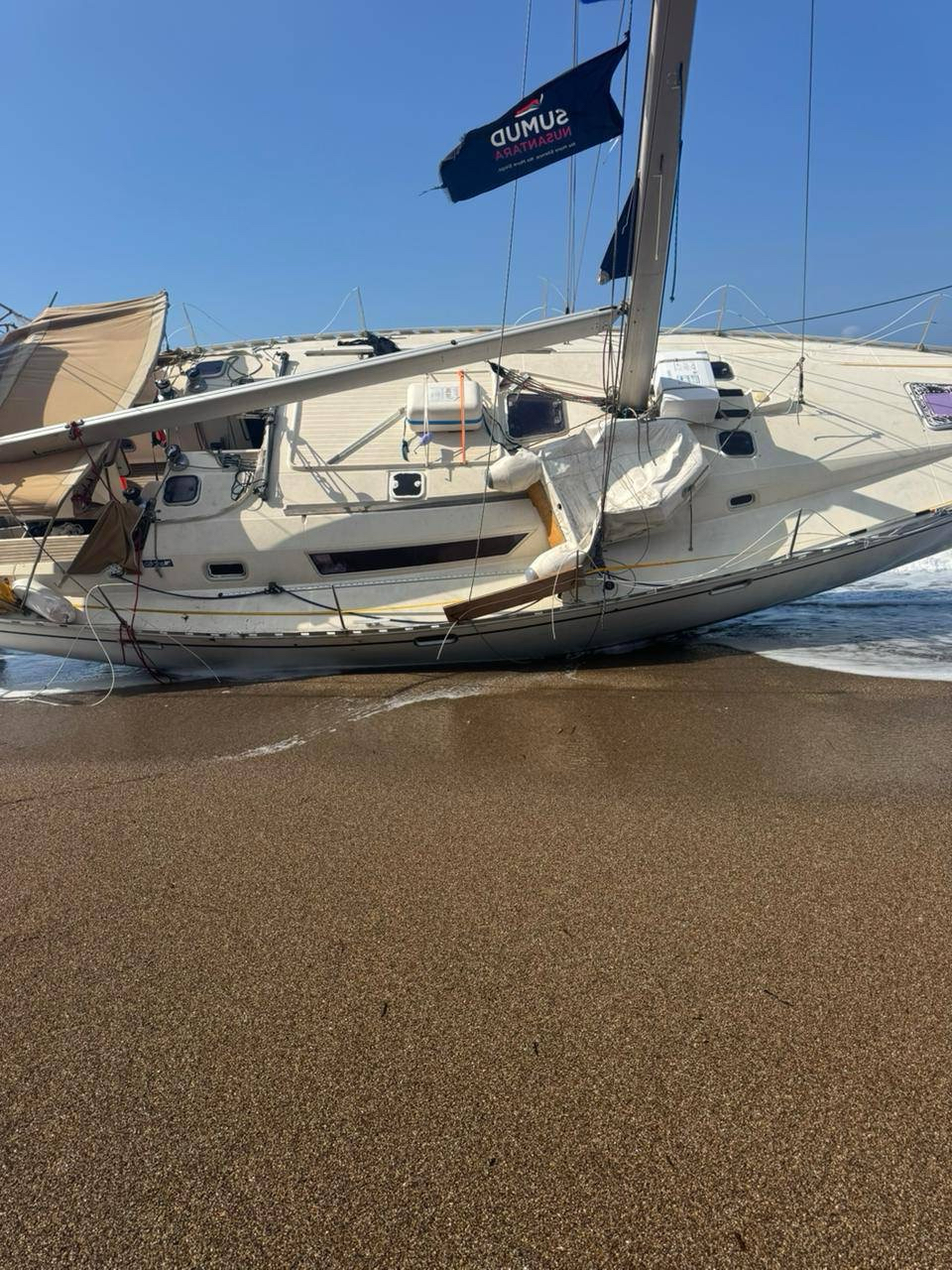
[00:00:01] Speaker A: Greg Terry was one of two Humboldt county residents abducted by the Israeli military in international waters from the Samud Flotilla on May 18.
In total, 428 people were taken and imprisoned by Israel from ships meant to break a naval blockade and deliver sorely needed aid to Gazans. Greg is now back in Humboldt and we were lucky enough to get him to KMUD for an in person interview.
We are presenting a lightly edited version of the interview on this newscast and we'll be posting our full interview with Greg Terry online.
What he described are horrible atrocities and terrible treatment of flotilla members by Israeli forces. Here's our interview with Greg Terry, a Humboldt resident who was recently released after being abducted and tortured by Israel.
[00:00:50] Speaker B: What is it like on board? What are people looking to do with the flotilla effort?
[00:00:55] Speaker C: We're trying to deliver humanitarian aid, but really on the scale of what's needed in Gaza, what we can carry is pretty small, really. What we're seeking is a political victory.
The biggest political victory we could achieve would be breaking through the blockade and establishing a political precedent for the delivery of more meaningful amounts of aid and for the free navigation of Palestinians in Gaza on the sea, to use the sea for trade and for fishing and to bring the power of the governments that are currently complicit or assisting with the genocide, bring that power around to force open. The political victory we ended up achieving was getting our butts kicked on camera by the Zionists for the whole world to see. Myself and a lot of the other European comrades who sailed have a certain amount of political protection on our bodies from the passports we're carrying, from our nationalities.
[00:01:51] Speaker A: Can you tell us a little bit
[00:01:52] Speaker B: more just what happened when Israeli forces intercepted the flotilla being abducted off the ship? And this is a radio audience, of course, so just any descriptors you have of just the experience, how you were treated, how you were possibly touched, what was said to you, and just the experience of being transferred by the Israelis.
[00:02:14] Speaker C: They attacked us twice, actually. Once off Crete, like 650 miles from Palestine. And they got maybe 20 boats and the cruise then and then dropped them off in Crete after roughing them up a little bit. My boat managed to not get caught that time, but we did get caught off the coast of Cyprus. We were kidnapped. The Zionists brought basically their SAR missile corvette as well as an improvised prison ship and then launched like fast attack boats to come over and board our sailboats. Then they had us go and wait, kneeling on the bow of the ship until they could maneuver closer to the prison ship. We were transferred onto their fast boats and then brought onto the prison ship. There were two prison ships because the fleet was spread out, so they needed two prison ships to get us all. And the prison ship I was on was relatively mild, right? We were basically given just frozen bread and water for food.
And there was insufficient room for people to sleep in the shipping containers that made up the walls of the pr.
No mattresses. You're just sleeping on hard, hard plywood. Our clothes were taken, so I was just in thin pants and shirt, as was everyone else. So those of us for whom there wasn't room in the containers, we just had to, like, walk in circles all night to stay warm outside. And then every once in a while, they'd shoot at us with beanbag rounds from their shotguns. The other boat friends who were on that boat described a situation that was pretty hellish. They were all really severely beaten on their way into the prison.
I saw one person who had been pinned to the ground and then tased 20 or 30 times. His whole back is covered with taser burns. I know on that. On that boat, I think there were more than a dozen sexual assaults, including a couple rapes. They also would be woken randomly throughout the day with flashbang grenades being thrown into their prison space, as well as being periodically shot with beanbag rounds as well. After we were on the prison boat for three nights. No, two nights. Three days. Two nights. And when they brought us to Ashdot in occupied Palestine and drug us out of there, and this is where they picked me up and threw me into a little tent, Looked up in this tent, and one of my comrades was on the ground being kicked by four soldiers. And then they saw me and they threw him out the other side of the tent. And they beat me up for a while. And then someone else got brought in and they threw me out now with my hands zip tied behind my back. And then we were all dragged into one big tent where we all had to kneel on the ground with our hands tied behind our back and our face in the ground for a few hours. And while we were in there, the soldiers distributed quite a few more beatings. People would sometimes call out to have their cuffs loosened, right, because people were losing feeling in their hands. A lot of people couldn't move their hands or feel their hands at all. One woman in particular was calling out for that, and they kept coming after her. And I couldn't see her because I was down in the ground. She was a few people away from me, but I could see the guards coming over to her and I don't know what they're doing to her, but she was just screaming and screaming until she was hoarse over and over and over again.
They were laughing in the background while they did this.
[00:05:29] Speaker B: The guards were so just completely unprovoked. People are already have their hands tied behind their back and they're just beating people.
[00:05:37] Speaker C: Yeah.
[00:05:39] Speaker B: Oh man.
How long was.
So you talked about a couple nights with the transfer on the prison ship and then the prison in occupied Palestine.
How long were folks there? How long were you there?
[00:05:53] Speaker C: Yeah. So after the processing in Ashdod, there was like this absurd bureaucratic process of like hundred. I went through like 12 different totally interchangeable bureaucrats, were actually taken to the Kitiat prison and we were there for one night in my experience. And what other people I talked to said is that the whole thing was awful, like pretty hellish and you know, like relentlessly painful and humiliating. But you could hold on to this little thought like, oh, okay, this is gonna be over in a few days. We'll be deported in a few days. I can just find a little quiet place down inside and stay there for a while. But there are Palestinians who have been in Kityat Prison for decades with no trial, no charge, no representation at all. Just like an unending hell that the Zionists have created for Palestinians there. And they don't get to hang on to that little thought that they're going to get out someday. I've talked to some people, heard about cells at Kitsiya that are pitch black, no lights, and like too small to lay down full length in or stand up in. So you can never stretch, you can never stand up. What we experienced was sort of just like a little sample of the kind of relentless violence that the State of Israel is capable of.
[00:07:10] Speaker B: Well, seems interesting too that the ceasefire and just how it's so called ceasefire would be the right way to put it. It's basically turned Gaza into completely what Israel was always accused of turning it into, which is a true open air prison with just rubble and desolation and bombings and people can't get out.
[00:07:29] Speaker C: Yeah, I think even, even prison is like too generous of a word because prison implies like due process and law. Right. But there's no, that does not exist for Palestinians. It's a concentration camp that, you know, a captive population that they're massacring and you know, so that the, the whole time we're going through this and getting our butts kicked and being forced to kneel and everything, the soldiers and the guards are always taunting everyone and they would kind of vacillate wildly between saying, like, oh, like, we know you have a good heart, your heart's in the right place, but you're misinformed. Right? The reality is not that bad. But then the next person to taunt you would be like, there's nothing left in Gaza. You know, we will take you to Gaza and leave you there to die. You know, like, we've destroyed Gaza and we're proud. It was like this bizarre flip flopping. The whole, the whole three days was like that. In Kitia Prison, the walls of the cells are covered in Arabic writing. A lot of it looks like poetry the way it's laid out. And like, my, my only regret about this whole thing is that I don't speak or read Arabic and I can't, I can't bring back those words of the people who are trapped there, who've been trapped there for years.
[00:08:42] Speaker B: I guess the question then is, you know, what can we do from here? And particularly for elected reps here in Humboldt county and surrounding regions. And I know Congressman Huffman put out a statement, but it was, you know, a fairly benign statement. But what should these folks, what should Adam Schiff, what should the Jared Huffmans of the world be doing right now that they're not doing?
[00:09:07] Speaker C: The Jared Huffmans, the Schiffs, first of all, are all taking money from the Israel Lobby. I think that's probably a big reason of why they're not doing very much. Even, you know, of our representatives, Huffman was the most active. And all he did was send a tweet.
My friends and family who were advocating for me by talking to our representatives basically only had totally dismal things to say. They were pretty useless and unhelpful. I think politics is about leverage. You want to influence your representatives, you want to influence fascist ethnostate on the other side of the world, right? You got to have leverage. And we can do that by threatening the electoral success of our representatives. We can threaten the profits of companies that partner with Israel, work hand in hand with the genocide in Palestine, and we can continue to do nonviolent direct actions like the Global Sumid Fetilla. And I would really encourage anyone who's listening who, like, wants to make an impact, sign up for the next one or sign up for whatever comes next in these internationalist actions against genocide in Palestine.
[00:10:20] Speaker B: For folks, especially in the counties we serve here at Kemah, Mendocino, Humboldt, Trinity, Del Norte, it's a good idea to maybe put pressure on some of these politicians, possibly to get some more done?
[00:10:35] Speaker C: Essentially, yeah.
I've been talking, I think that that might be kind of what's next on my schedule is trying to get some face to face time with our representatives and put the pressure on there.
[00:10:46] Speaker B: When we were kind of leading up to this interview, you didn't have your phone anymore. When folks from the flotilla are taken and their belongings are taken, is there any hope of retrieval or do they just steal everything?
[00:10:56] Speaker C: Oh, it's so weird because most of our stuff I think is trashed, but someone I know just randomly got their headphones back. It's like kind of bizarre.
They have this huge apparatus of paperwork that you go through where they like put your possessions in your pockets in like this evidence bag and seal it. And as you go through this long line of processing, you're accumulating like this stack of paperwork at every step. And at every step, the next official like takes all your paperwork out, looks at it, creates his own form, stuffs it all back in the envelope and you go on to the next person.
And I mean, we were in there for a couple of days. I don't know what all this was about, but I think there's sort of a. It's important for this government that's committing crimes against humanity, committing atrocities, to create like a legal facade, a bureaucratic facade that somehow justifies all this. That like, oh yes, all of these activists were beaten and assaulted and illegally kidnapped. But look, we did the paperwork, so it's fine, right? And I think there's probably the same sort of thing going on for the destruction of Gaza and the murder of Palestinians. There is that.
[00:12:14] Speaker B: I mean, it seems like just giving back random items and doing all this paperwork is just. They just are, as you're saying, paying lip service to the idea of doing things under international law or under policy or in a way that.
Cause Israel does try to represent itself as a democracy, which is of course just completely untrue.
And it's just at some point when does anyone stop believing it?
[00:12:40] Speaker C: While we were in that big tent, we were all forced to kneel, they were playing the national anthem of Israel over and over on repeat. It was a children's choir version. Just endlessly for hours when we would be like yelling too loud for a doctor for someone who had passed out or to get cuffs loosened, right? All the soul would all start singing along as loud as they could over the sound of our cries and our voices. And I think they really, they really all believe. I remember from earlier on in this phase of the genocide, when the bombing of Gaza was really, really intense. There was some surveys done of Israeli citizens asking, like, if you thought the IOF was using the appropriate amount of force in Gaza. And 94% of respondents in Israel said that they thought the IOF was using the right amount or not enough force in the bombing of Gaza, which has killed 80,000 people directly from bombs and bullets and countless more from starvation and disease caused by the IOF's targeting of civilian infrastructure like hospitals and water treatment plants and housing.
[00:13:53] Speaker B: And then kind of the last thing I wanted to ask, is there anything we missed? Anything else we should get out there? Information, Just things the public doesn't know yet or that needs to be reinforced to our listeners.
[00:14:05] Speaker C: I don't see anything at all redeemable about Zionism or the Israeli project. Right. There's just nowhere to go. I think the ideology is inherently genocidal. There's no reforming it to be somehow collaborative with the Palestinians.
What we've seen in the last few years, we've seen Israel escalate the bombing in Gaza to devastating proportions. We've seen them attack Iran, we've seen them seize more land in Syria. We've seen them invade Lebanon again and they're still bombing Lebanon.
And now we've seen them reach out 650 miles into the Mediterranean to attack a fleet of civilians carrying humanitarian aid, kidnap them on international waters.
At every stage of its growth, Israel has claimed that that was enough, that they would stop there. Right.
And immediately. They always continue to expand, continue to push more Palestinians off their land, continue to seize more land from the countries around them.
The imperial appetite of Israel is totally boundless.
If the international community, if the governments that really have the power to stop this don't stop Israel right now, they're just going to keep going around the world calling everything and everyone they don't like Hamas and just trampling human life underfoot with every step.
We cannot allow that to happen. Right. Palestine must be free. And Palestine will be free.
[00:15:38] Speaker A: We thank Greg Terry and all Samud Flotilla members for their immense bravery and strength.
[00:15:44] Speaker B: If you want to learn more about
[00:15:45] Speaker A: the Global Sumud Flotilla, you can check out their
[email protected] an extended length version of our interview with Humboldt resident Greg Terry, who was abducted by Israeli forces last week in international waters, will be posted online via our social media channels.
Reporting for kmud, I'm April Lewis.