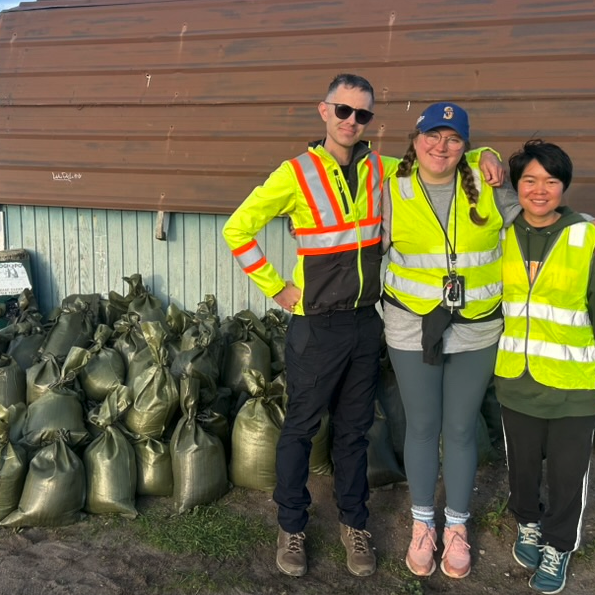
[00:00:00] Speaker A: Humboldt coad, AKA Humboldt Community Organization's Active in Disaster, is taking a leading role helping the county prepare for the upcoming El Nino flooding season.
KMOD News spoke with Nick Brown Crawford, Executive Director of Humboldt COAD, to learn more. Thank you, Nick, for coming on today. Really appreciate it. I kind of wanted to start with kind of a base question for folks that may not be super familiar with coad. Can you tell us a little bit about the role and function of your organization in Humboldt County?
[00:00:35] Speaker B: Yeah. So Humboldt COAD stands for Community Organizations Active in Disaster. And we are a part of a statewide and then a national framework that's called the voad, which is Voluntary Organizations Active in Disaster that's been around for over 50 years.
And we're basically a network of all of the non governmental organizations and agencies that touch disaster and disaster recovery.
So what I do at the regional level is coordinate all of those nongovernmental services and resources and then we assist government and kind of gap fill along the way for things that they cannot do as our local government.
A big part of that is recovery.
It's hard, hard for us to get a declaration up here and meet those thresholds.
So a lot of our recovery is community led and that's a big part of what we.
[00:01:35] Speaker A: And then part of why we're speaking today, of course, is the upcoming El Nino season and we're getting our first big storm of the year at the end of this week. What are some ways community members, especially when they're, when they interact with your organization, can prepare themselves for El Nino flooding this winter?
[00:01:55] Speaker B: Yeah, so I think it's really, you know, starting point is knowing your risks. And a lot of that, you know, we had some tidal flooding events that already occurred this year in January.
And so we have that kind of baseline of where a lot of these households that flooded in January, they know to expect similar or greater flooding going into Thanksgiving and Christmas.
And so using those kind of personal flood histories as a guiding point and then starting those mitigation projects, and that's a lot of the work that we've been doing is advising community members on what that mitigation looks like, what's possible, what's not. And then we're trying to make as many supplies available to the public as possible.
And we developed a new tool for folks to find storm supplies and sand and sandbags in our area, find sandbags.org and you can find the free sites as well as they start coming online. So that's one way that we're just trying to make that Connection between the resources that are available and the communities that need them.
And our biggest recommendation this season, because we do expect El Nino to have pretty widespread impacts from the tidal and coastal floodings to inland start getting into the storm and atmospheric river action.
And we're asking folks to start that preparedness kind of at the micro level. So building a little community pod, getting to know your neighbors, who checks on who, knowing who might be homebound in your neighborhood.
Those are the moves that if you set those up now, that's really going to help us out when the first responders start getting stretched out over the whole county.
If having that kind of solid neighborhood preparedness plan is really going to serve people well this season.
[00:03:54] Speaker A: And you spoke a little bit about the community sandbag stations that you folks are setting up. I'd love to know a little bit more about what the best way for folks to utilize sandbags is. I mean, I think about, you know, putting them in front of your garage and some of the lower kind of entry points to a home. But what are some of the general uses of that as a tool?
[00:04:15] Speaker B: Yes. So, you know, sandbags, it's not.
They can serve you really well or they can really work against you if they're not placed properly. And that's something we're really trying to message out to folks. We have a lot of materials on how to properly fill a sandbag and how to place them. It's a little harder to illustrate that over radio, but there are very specific ways on how you fill sandbags and how you lay them.
And so there's lots of safety tips that we have that go into that. And we're talking about that at the community meetings that are happening right now.
But there's some great resources online, and we've consolidated all the flood resources into one page on our website so people can find these tutorials. Now, sandbags don't stop water. It's just diverting water. And that's the biggest thing to keep in mind is where you're sending that water.
And you know it really, sandbags are going to help and do the thing. If you're looking at a couple inches and you're just trying to defend against that one doorway because the water might be just getting a little bit too close to the threshold.
That may be a really appropriate place to sandbag.
If you're trying the sandbag around the entire circumference of your property, that's not something we would recommend.
Just because the water only needs one way in. And when you're trying to do a larger sandbag operation like that, the chances of water sneaking in and then getting trapped within that barrier are much greater.
And the I do want to mention also the sandbag sites that we're bringing online right now. So we're focusing on areas, kind of prioritizing areas that are going to be seeing these impacts first.
And that's King Salmon and Fields Landing. And at these sites we're partnering with other agencies. So at the King Salmon site the harbor district worked with us to pour the concrete slab and build the station.
And then we were able to have public works from the county donate sand and they've donated several truckloads already.
And then we're working with our tribal partners.
So Bear River Rancheria is providing all of the sand bags to us.
And then we have these days like today where I am right now, where we're at the stations with volunteers and, and folks that do have flood fighting training to help demonstrate with folks hands on how you place these bags, how you safely fill them. And then our volunteers here have identified households that have signed up and asked for help from disabled folks and elderly folks.
And so days like this is where we can match them up with volunteers that are coming out to assist and really get some of these bags not only just filled but moved out to these residents properties for them.
[00:07:21] Speaker A: How should folks get in touch if they do want to volunteer for some of these efforts?
[00:07:27] Speaker B: Yeah, so the easiest way to sign up to get involved it's on the same website. So going on our sandbag website, so find sandbags.org and on the bottom left there's a box that says neighbors helping neighbors and there's a button that you can click to sign up for volunteering and then a button you can click to sign up. If you need help it is if you are signing up to need help, it is dependent on who's signing up to volunteer because it is we are doing this kind of one to one matching with volunteers.
So it's not guaranteed on any timeline. It's on these specific days when we do do these call outs for volunteer sandbagging days we have a lot of interested community members and some civic groups and some sports teams from the colleges that are coming out to join us so that we can bag as many as we can.
And then over the next couple days we'll work on getting them placed with smaller teams on the properties. But signing
[email protected] or they can email us directly at infoomblecoad.org
[00:08:41] Speaker A: and then are there still some Community meetings coming up as well.
[00:08:46] Speaker B: Yeah, so we're partnering with the county Office of Emergency Services and a bunch of other agencies like National Weather Service, County Roads, Caltrans, and then I have a big section with COAD and that as well. And the first community meeting just happened for King Salmon and Fields Landing last week and it was very successful.
And then we have three more coming up and there's one on November 12th, so this Thursday, and that's in Freshwater Jacoby Creek Bayside area with Freshwater Grange.
And then following that on November 17th is our community meeting in Ferndale. And so that's at Ferndale City hall. And that's for the entire Cone Eel River Valley.
And then we head north on the 18th and that's going to be for the big lagoon and ORIC community at the OREC Community Hall.
And then all of these meetings are from 6pm to 8pm and the Sheriff's office is also going to be live streaming them on their Facebook page. So if you can't attend, you can look it up there.
And we really encourage everybody to bring a neighbor and come and have some great conversations with us. That's a really good space to understand some of the more specific risks to where you live.
[00:10:15] Speaker A: And is there anything else you'd like folks to know either for the upcoming flood season that we didn't cover or about COAD in general?
[00:10:23] Speaker B: Yeah, I encourage people to stay as updated and involved as possible with what we're doing. Our operations are just getting started and we anticipate a lot of work on the recovery side after these floods as well. And that's really when we need the community to join us in these efforts to especially uplift some of these communities that don't have the means to recover themselves.
Great way to do that is to sign up for our updates.
You get situational reports from our end.
We also share some information on volunteering events and we do mutual aid call outs as well.
And those have become really successful. We're very proud of how our community has stepped up when we do these mutual aid call outs.
And so the best way to do that is to sign up for updates on our
[email protected] and all of our meetings are public and so folks are welcome to attend any of our zooms to see how we're involved. Network works and we're always looking for people to get involved.
[00:11:34] Speaker A: It will be important to stay prepared for flooding this El Nino season.
At kmud, we'll do our part to bring you on air alerts about severe flooding events via the Emergency Response Team run by the News Department.
If you would like to get in touch or volunteer for Humboldt Coad, you can check out their website humboldtcoad.org if you would like more information on sandbag locations, you can go to findsandbags.org Stormsupply map for KMUD News, I'm April Lewis.