Episode Transcript
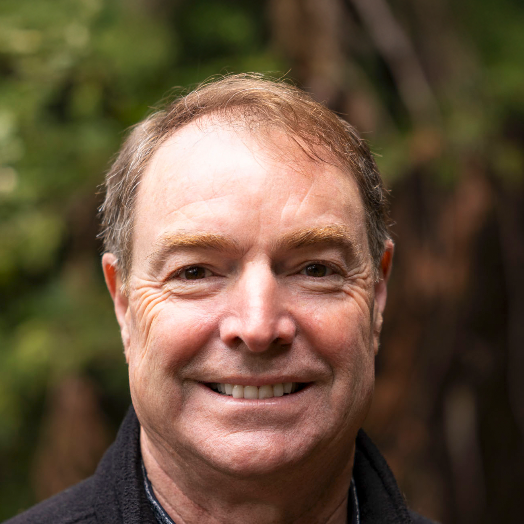
[00:00:00] Speaker A: Damon Connolly is the current California State assembly member for California's 12th district, which consists of Marin and parts of Sonoma County. Currently, the Democrat is the clear frontrunner to win California's 2nd district state senate seat in November. This would expand Connally's constituency greatly across the entirety of the north coast, including Humboldt, Mendocino, Del Norte and Trinity counties. KMOD News spoke with the prospective state Senator to learn what ideas and perspectives he has on the north coast region he would be serving. We began the conversation with Damon speaking on what running for State Senate has entailed and the diversity of his prospective district.
[00:00:44] Speaker B: Well, thanks for having me on the show, April.
It's always a pleasure.
Yeah, I've been running for State Senate District 2 now for probably the better part of two years, and it's been an amazing opportunity to, to really start to get to know seven counties, which is the scope of the district a lot better and probably the main difference from writing for the assembly. And I enjoyed serving in that role for about four years.
Representing the about half the Senate district is a sheer size of the district, the amount of travel, as you can well imagine the range of issues and interests, starting with the fact that this State Senate district has some of the wealthiest communities in California located in it, but also those facing the most poverty in California. As we know, rural issues are very unique as well.
So really coming up to speed on those and trying to meet as many new people as I can.
[00:01:59] Speaker A: Trinity county is the poorest in California. So as you mentioned, these are areas with very different needs. What have you found so far have been the most successful appeals to voters in these areas, especially as someone coming from a very different sort of space, coming from the North Bay in terms of the constituents. There's, you know, what, what have you done specifically to better appeal to voters up here?
[00:02:25] Speaker B: A piece of advice that was imparted to me early when we started on this, which I've tried to live up to every day, is folks along the north coast want to see their representatives show up where they are to better understand what's happening. And that's really been one of the main pieces of joy I've had in this race is to be able to do that.
Of course, some of the most beautiful places on earth, but also a lot of unique challenges as well.
I think one thing I bring to the table that has resonated with folks is a strong environmental background. And I found that ethos very strong up and down this coastal district.
I know the north coast stands strong in protection of our Coastlines, opposition to offshore oil drilling.
And in fact, I've participated already in community gatherings and forums and outreach efforts around that all the way up and down this coastal district as well.
Rural health care is a huge issue up the north coast. So that has really stuck out to me as a key issue to continue to work with north coast residents. It includes things like attracting and retaining healthcare professionals. It's proving very hard in some of our more rural communities as well as of course fighting strongly back against the Trump administration on Medi Cal cuts, which directly affects the ability to deliver quality health care all over California. But again, particularly in rural communities like those I'm seeking to represent.
[00:04:28] Speaker A: Speaking of environmental issues, one of the questions I wanted to ask you about is Assembly Bill 2494, which was recently vetoed by Governor Newsom and for us up here of course has a big impact because Jackson Demonstration forest is over 48,000 acres in Mendocino and the large just in that system.
I wanted to read one quote from Governor Newsom's statement after vetoing that bill. It was quote, by narrowing the management of these forests to a limited set of public benefits, this bill risks the state's ability to fully demonstrate the best science based practices. At a time when California is racing to keep pace with a rapidly changing climate, we cannot afford to lose the flexibility needed to safeguard our forest for future generations.
What do you see as the future of at least the mission behind changing basically the format of these demonstration forests like this bill would have? And do you agree with the governor's statement or do you see it from a different perspective?
[00:05:34] Speaker B: Yeah, I would say I see it from a different perspective and I was a little bit confused by that statement that he made. It's interesting we both honed in kind of on the same statement in that I was a supporter of AB 2494 and a big shout out to Assemblymember Chris Rogers, who represents the north coast, who brought the bill forward.
I was a co author of received bipartisan support throughout the process.
But then of course in recent days, as you noted, was VetoeD by the governor. Yeah. If anything, AB 2494 was an effort to update the perspective on demonstration force, most notably on Jackson, which you noted is the largest one in the state.
This bill came from a lot of community input. Folks are recognizing that kind of the old days of the prioritization and emphasis on logging and economy based on that needs to be broadened now where we're looking at community benefits, recreational opportunities, climate adaptation around these demonstration forests. So I Think the bill was simply a way to do that rather than narrowing the focus. In effect, it was kind of increasing it to really reflect new thinking around sustainable long term management of our forests that are not simply based on kind of the older extraction based economy.
[00:07:32] Speaker A: Should we be considering any structural changes to Cal Fire, especially in regards to funding sources and timber as a funding source?
[00:07:42] Speaker B: Yeah, we should be. And in fact that work is actually ongoing right now. So the bill I referenced, AB 1891 for example, would be a dedicated source of funding for beneficial fire out of the Caltrans budget, which is in turn now, as you know, funded to a great extent by the Greenhouse Gas Reduction fund, which is coming out of the reauthorization of the Cap and Invest program in California.
So as part of that we are very much looking at how do we make the these funding streams sustainable. Voters also stepped up and passed Proposition 4 a couple of years ago, the historic climate bond.
And a lot of the key focuses of that money, which is $10 billion over 20 years, is looking at things like home hardening, like best practices around forest management. So one of my key roles is to make sure that money is flowing out to our communities.
So you hit it on the head. There's actually a conversation going on right now about exactly how all these funding sources weave in together.
And the bottom line is making sure that money and concrete results are being delivered to our communities so people can better protect themselves, their homes, their communities.
And we do it in a sustainable way. We do it in partnership with tribes and the like. So we're going to keep working on that as a priority between your current
[00:09:44] Speaker A: assembly district and what it would look like as a state senator. You know, you're taking over a space that is the entirety of what was considered the historical Emerald Triangle. And of course that's led to, you know, really bad economic issues in the last 10 years. Garberville is right where we are, is a bit of a ghost town compared to what it was years ago, especially during the boom years around legalization, you know. Do you, have you thought about any specific approaches to helping the economy in these areas?
[00:10:13] Speaker B: Look, we all can't help but notice the change.
I remember coming back or going up north back, let's say 15 to 20 years ago.
And you can tell even a lot of the local businesses, whether they were coffee shops, auto repair shops, the cannabis industry was generating local economic activity and jobs, even aside from those employed in the industry themselves. But the spillover effects, this area is no stranger to boom and bust right back in the day it was logging and other extraction, I think the community wisely moved away from complete reliance on that. Then it was cannabis.
And that seems like that has fundamentally changed now. Gone are those days where you can walk into a coffee shop and sense that, you know, that's what was going on in terms of the money supply and economic activity locally. So it's kind of what's the next step.
I'm very excited by things like Cal Poly, Humboldt being in the community.
How we can leverage that and utilize that to spur economic activity. Offshore wind, which is a very promising direction for the region, of course now is on hold by some short sighted decisions by the Trump administration.
In the meantime, we're continuing to try to at least keep, keep the economic local portion of that alive through for example, Humboldt Bay and economic activity around that.
So I think there's a number of things I know it's a key issue in local races as well. I'm really tuned into those up in Mendo and Humboldt around how can we bring these areas back to life? The healthcare, how can we attract and retain good employees there as well? So all this fits in together in terms of re energizing our communities on the north coast economically. So I'm happy to be in the middle of that working with others.
[00:12:53] Speaker A: Prospective District 2 State Senator Damon Connally is planning to be in Eureka for an event hosted by the Humboldt association of realtors on October 24th. We'll let listeners know more about that event once it's finalized and announced.
Reporting for kmud, I'm April Lewis.