Episode Transcript
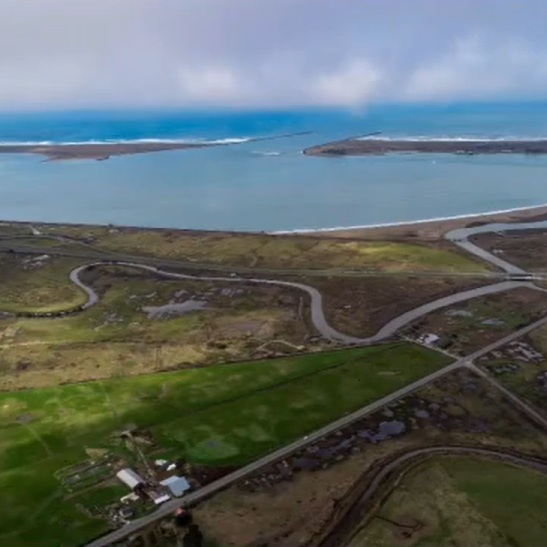
[00:00:00] Speaker A: The first phase of an ecosystem wide Elk River Valley restoration project has gotten a go ahead from Humboldt County's Planning Commission, but some commissioners have doubts about its long term viability and loss of ag land.
Maintenance of the project area's tide gates and loss of 11 acres of farmland were the prime issues as the commission reviewed the project at its Feb. 19 meeting.
Commissioners lauded the project's aim to restore 400 acres of the estuary to the condition it was in prior to agricultural installation of tide gates, levees and drainage ditches that impair fish habitat and are now dysfunctional but recently ceded. Commissioner Todd Fulton is concerned about ag land being subject to tidewater.
Darren Moreau of Caltrout, the project applicant, said ag land is already out of production due to flooding and groundwater rise. But Fulton argued that burdensome permitting has discouraged maintenance of flood control infrastructure. The issues were discussed in this exchange between Fulton and Miro.
[00:01:07] Speaker B: Because the infrastructure is so dysfunctional, we have now allowed the brackish water, I guess we could say, to come into those lands and ruin that grassland.
[00:01:17] Speaker C: Correct.
[00:01:17] Speaker D: I would say that's part of the process, but it's not the overriding factor of the process. So groundwater. Groundwater's coming up regardless of how you surround it with dikes and levees.
[00:01:28] Speaker B: So I guess what my point is is basically your proposed restoration project will essentially take that ground out of ag use.
[00:01:38] Speaker D: It's already out of ag use.
[00:01:40] Speaker B: Not all of it.
[00:01:42] Speaker D: Those parcels have been retired from ag use.
[00:01:45] Speaker C: Okay.
[00:01:46] Speaker B: I just want the county to realize that once you lose ag ground, you will never get it back.
Agricultural is a huge commodity in this county still, so once it's gone, it'll never come back.
[00:01:57] Speaker A: During his presentation, Miro described the project, which is in the greater Eureka area of the Elk River Valley, as an effort to steer the area toward more ecological conditions.
He said the tide gates and other flood control infrastructure aren't working anymore and the goal is to replace it with ecologically sound versions.
[00:02:18] Speaker D: The community infrastructure hasn't been maintained over time. So all those culverts and tide gates and ditches and bridges that were in there that were placed over a century ago haven't been maintained. And so we want to come in and help with that drainage infrastructure, which will result in improving and protecting the agricultural lands that are still viable.
And so that community infrastructure is at risk. And we hope to help it along and help the other agencies prepare for improvements as well. And then that relic drainage infrastructure is really impairing the recovery of habitat in this area. And so we're trying to give it a head start and bring it along so it can recover and maintain the viable habitat. As sea level rise comes in, climate change and so forth, it can evolve with those conditions.
[00:03:06] Speaker A: The goals of the project were praised, but some commissioners reiterated concerns about loss of ag land.
Acknowledging the issues, Commissioner Noah Levy noted that a finding has to be made that there's no net loss of ag land. He asked county planner Andrew Whitney about it and got this response.
[00:03:25] Speaker C: It is a very interesting question because you talk about the loss of agricultural lands and typically you would think of that loss being to development.
But in many ways, this project is the opposite of development. In other words, it's the reversion of development to a natural state. For instance, Orton Creek was culverted, and I'm not sure when, but this is a creek that comes down from, I guess, the Herrick Road area neighborhood up there, and it was culverted and it's been culverted for a long time and it's silted and it backs up and it's a failing drainage situation which leads to upstream impacts.
The project includes the daylighting of that creek and the restoration of that creek bed for habitat use.
Unfortunately, that restoration will result in fencing off up to 11 acres of lands that may have been used for agriculture in the past.
So is it a loss or is it an ecosystem gain?
[00:04:38] Speaker A: Whitney added that areas within the project will still be viable for agriculture. He said, although agricultural use won't be happening.
There's nothing stopping a future civilization from doing that necessarily with this project.
It's not like it's getting paved or concreted or built into housing or whatever.
After some in depth discussion, the commissioner unanimously approved the project's phase one permit. Work on it will begin this summer. And in addition to the ecological restoration, the project includes land return to the Wiat tribe and public access through development of several trails and a parking area in Eureka. For KMUD News, this is Daniel Mintz.